
Tor privacy depends on more than a familiar browser icon. The software underneath must safely build circuits in the Tor network, handle network changes, and protect your traffic without exposing more data than needed.
The Arti Tor client is the Tor project’s Rust-based implementation for application and proxy use. In August 2026, it’s ready for real client use, but relay and directory authority roles aren’t yet equally ready.
That distinction matters to developers, privacy-minded users, and relay operators; Rust’s memory safety doesn’t remove browser, endpoint, or user-behavior risks.
Key Takeaways
- Arti is ready in 2026 for client use as an embeddable Rust library and local SOCKS proxy, but it does not replace the entire Tor ecosystem.
- Rust improves memory safety, while privacy still depends on secure configuration, endpoint protection, browser hygiene, and user behavior.
- Developers should pin compatible releases, test
TorClientConfigand API changes, protect state directories, and avoid direct-connection fallback after failures. - Tor Browser remains the safer default for routine anonymous browsing, while stream isolation can help separate accounts or activities.
- Relay operators should continue using supported C Tor software in production until Arti relay and directory authority support is fully ready.
Arti enters practical 2026 client testing
Arti is not a new anonymity network. It connects to the existing Tor network through a modern codebase written in Rust. Its goal is practical: provide applications with an embeddable client through TorClient, while reducing the memory-safety risks associated with large C codebases.
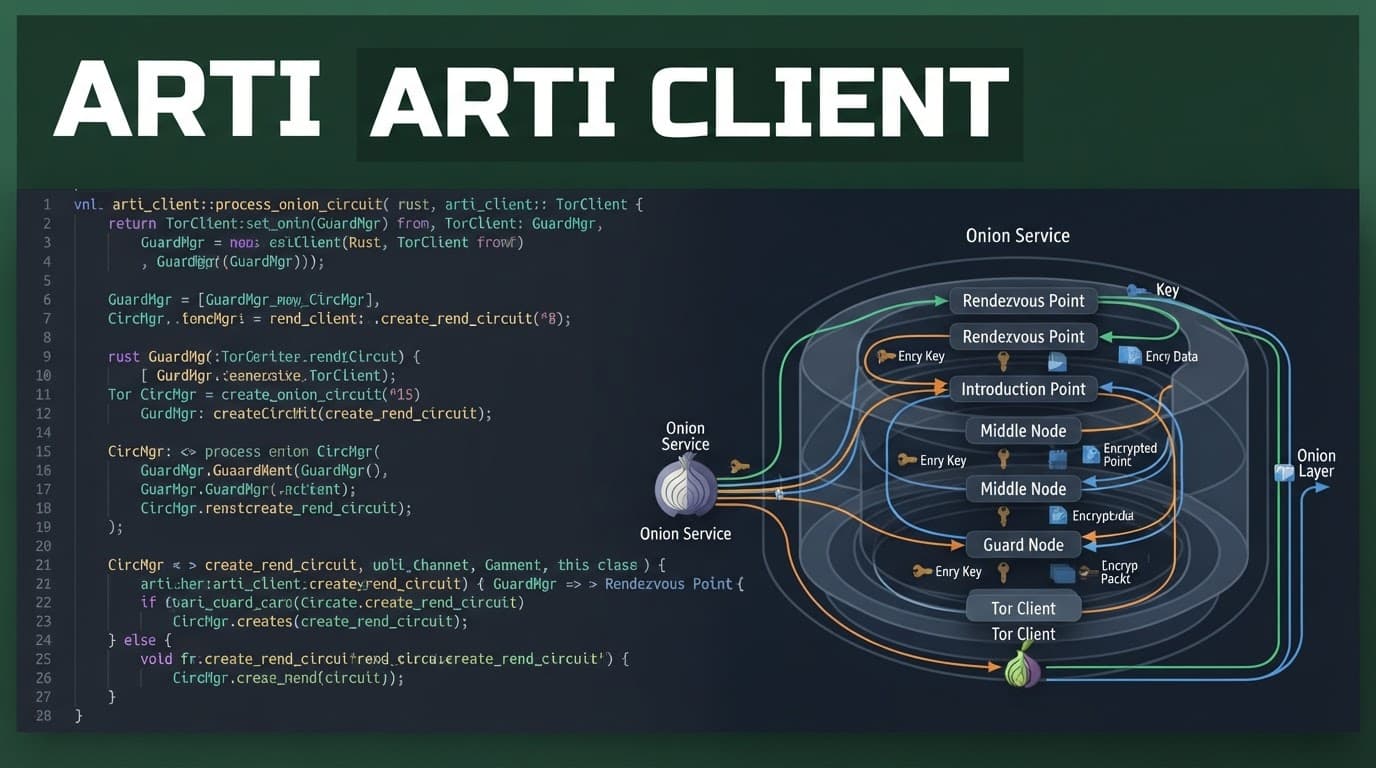
The project moved quickly in 2026. Arti 2.0.0 arrived in February, followed by regular releases through Arti 2.5.1 on August 4. The Tor project’s Arti FAQ confirms that Arti is ready to use as a SOCKS proxy and inside Rust applications. Its bootstrap process retrieves a network consensus before making informed connections. It also supports onion service access through an onion service client and hosting onion services.
There is still an important limit. Arti does not yet provide finished relay support for public Tor network operators. Relay and directory authority work continued across the 2.x releases. Experimental features behind a build flag or an active development milestone do not justify replacing C Tor in production.
Arti is ready for client traffic today. Relay support remains active development work, not a reason to change a stable relay setup.
The Arti 2.4.0 release notes show the direction clearly. That release improved connectivity for onion services and made flow control and congestion control stable when built with the flowctl-cc feature. It also included breaking changes to TorClient APIs, so teams should test TorClientConfig changes alongside API changes. Teams should pin versions, treat semantic versioning as guidance, and test each TorClient upgrade.
Why Rust and the RPC interface change the Tor client discussion
Legacy Tor is mature, trusted, and still needed for major parts of the Tor network. It has years of real-world hardening behind it. Arti does not replace that history overnight.
The Rust programming language gives Arti a different foundation. Rust’s ownership and lifetime rules provide memory safety, preventing common errors such as use-after-free bugs and accidental data races. Those are serious problems in network-facing client software, where a small parsing error can become a security issue.
Rust is not magic. Privacy can still fail through tracking, unsafe configuration, a compromised endpoint, or shared identifying details. Rust reduces one category of risk. It doesn’t remove the need for careful privacy habits.
Here is how the two approaches compare in practical terms.
| Area | Legacy C Tor | Arti in Rust |
|---|---|---|
| Main strength | Long operational history and broad feature support | Modular code and stronger protections against memory errors |
| Application use | Often controlled as an external daemon | Embeds a TorClient through Rust libraries, with TorClientConfig for application configuration |
| Automation | Uses the traditional control port model | TorClient adds capabilities-based JSON controls |
| Relay operation | Established production option | Still under development in 2026 |
For developers, the change is less about replacing a command and more about changing the shape of an application. The arti-client crate gives Rust programs a safer API for routing selected traffic through Tor with a TorClient. That TorClient returns streams that applications can consume through AsyncRead and AsyncWrite.
How the RPC interface changes old control assumptions
C Tor’s control port became a common way for local tools to inspect or direct a Tor process. Arti’s approach starts with a TorClient and uses a capabilities-based JSON RPC interface. This API design gives a TorClient only the permissions it needs, unlike the old model.
That approach can reduce the danger of giving every local process broad control over Tor behavior. Keep a local TorClient’s RPC interface local and protect its authentication material. Never expose the control port to a network interface. The capabilities model narrows permissions, but it doesn’t make an exposed endpoint safe by itself.
The Arti command-line documentation tracks the current proxy-focused build and is useful when you need release-specific flags and configuration details.
Embedding Tor connections in Rust applications
An async Rust application can own a TorClient for anonymized outbound connections instead of relying on a separately managed Tor daemon. In the Rust programming language, this model suits a research tool, privacy-focused updater, or onion service client with selected traffic routed through Tor.
The normal pattern is simple, even if the code has several moving parts:
- Pin a compatible
arti-clientrelease in Cargo and verify the matchingTorClientAPI. Select compatibleCargo featuresbefore adding runtime or transport support. API changes can matter between releases, so confirm the matchingTorClientConfigbefore upgrading past the 2.4.0TorClientupdates. - Build a
TorClientConfigwith a private state directory, network settings, and bridge requirements. Give that directory restrictive permissions and persistent storage, so aTorClientConfigcan reuse state safely between restarts and aTorClientcan recover cleanly. Configure thatTorClientas a bridge client; confirm theTorClientbuild supports pluggable transports or experimental features for the installed Arti version and build configuration. - Initialize a
TorClientwithTorClientConfigand choose the bootstrap behavior that fits your application. A bootstrappedTorClientwaits for current network metadata, while an unbootstrappedTorClientlets your application control startup. Either mode requires a current network consensus from the Tor network. - After bootstrap, use a
TorClientto open an async TCP stream, exposingAsyncReadfor incoming bytes andAsyncWritefor outgoing bytes. The resultingTorClientstream lets application code useAsyncReadfor response bytes andAsyncWritefor request bytes. ATorClientwrapper can useAsyncReadfor framing andAsyncWritefor flushing.
Most deployments use the Tokio runtime, a common async runtime for async Rust. Arti components can also support async-std setups. An async Rust application can connect its TorClient stream to existing AsyncRead and AsyncWrite adapters. Cargo features select runtime and TLS choices, so check the documentation for the exact release you ship instead of copying old feature lists from forum posts.
Keep error handling close to the TorClient connection logic. Bootstrap failures, temporary directory problems, bridge failures, and dropped streams can happen. Treat an AsyncRead error as incomplete response data, and treat an AsyncWrite error as an unsent request. Report a safe error, retry with limits, and never fall back to a direct connection without making that choice clear to the user.
Using Arti as a local SOCKS proxy
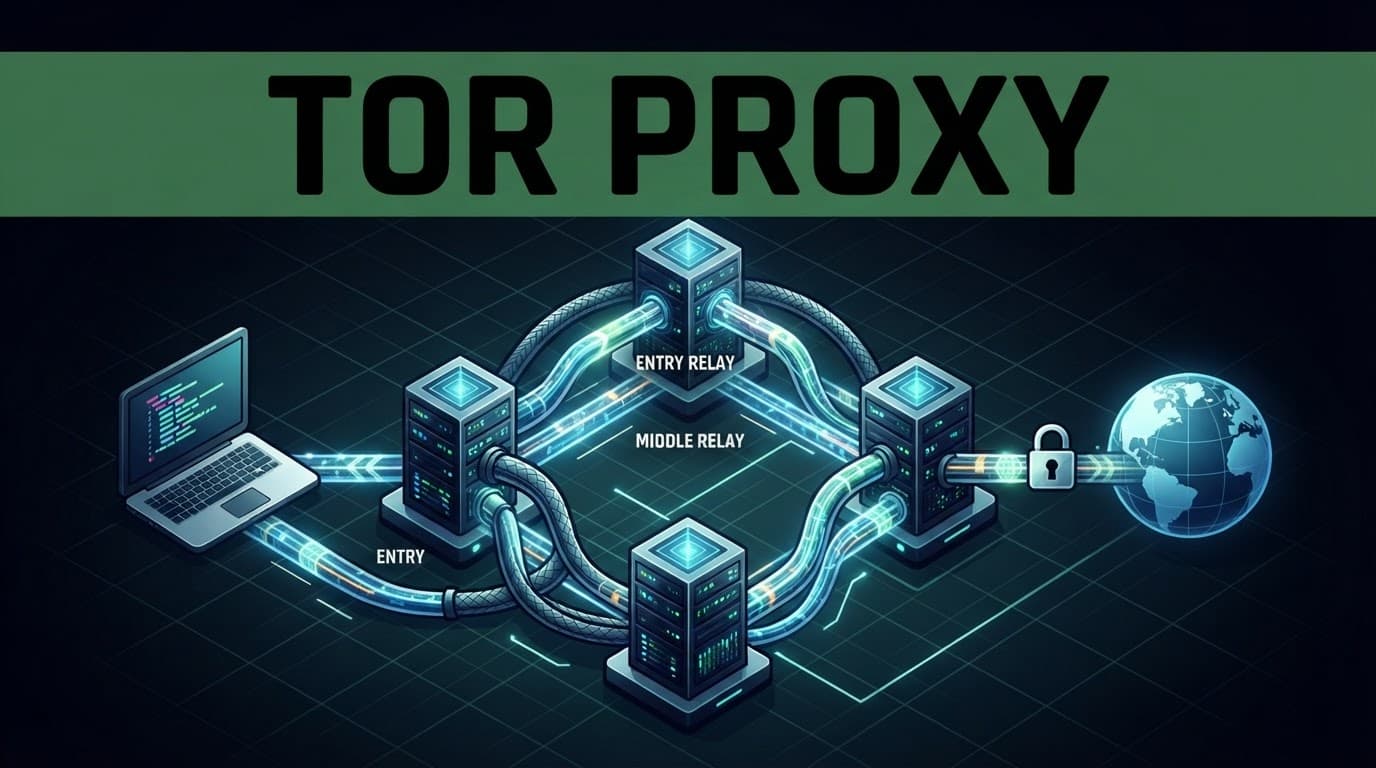
You don’t need to write Rust to use Arti. The command line utility can run as a local SOCKS proxy, letting compatible applications send selected traffic through Tor. An embedded TorClient serves a Rust application directly, while the application manages TorClient itself.
A safe local setup starts with a local-only address, a protected state directory, and clear application proxy settings. Use the documented proxy command for your release. It starts an internal TorClient as a local SOCKS proxy, while an embedded TorClient needs its own readiness check. Wait for the proxy to connect to the Tor network, and understand its bootstrap behavior before relying on it. If censorship blocks normal Tor access, review current bridge options and supported pluggable transports.
Tor Browser needs extra care
Tor Browser (the official application, also identified as TorBrowser) is more than a browser configured to use a proxy. Its design includes bundled connection behavior, profile isolation, anti-fingerprinting changes, and security defaults.
For normal browsing, leave the standard Tor Browser connection path in place. On Linux or Windows, using TorClient with a separate test profile should be treated as an advanced compatibility test, not an automatic privacy upgrade. Don’t add extensions, change fingerprinting defenses, or assume a custom proxy makes a browser safer.
Stream isolation protects separate activities
Stream isolation is one of Arti’s most useful privacy controls. An IsolationToken represents a chosen activity boundary, and a TorClient can attach that IsolationToken to a connection or activity.
For two accounts, a TorClient can assign an IsolationToken to each account. For two research tasks, assign a separate IsolationToken to each task. Streams with different IsolationToken values are intended to use separate Tor circuits, reducing the chance that traffic patterns link them. An IsolationToken cannot undo account logins, identifying cookies, or personal disclosures on a destination site.
What users and relay operators should do now
For everyday users, the change is gradual. Arti can already act as a Tor proxy, but Tor Browser remains the safer default for routine anonymous browsing on the Tor network. The client layer is improving first because users and applications can use it today.
Relay operators should monitor Arti releases, test only where recommended, and keep production relays on supported C Tor software for the Tor network. Stable flow control and directory authority work show progress, but neither means full deployment readiness.
Researchers should verify onion addresses independently. Names such as Tor Taxi and Tor Watch may appear in search results, but neither a familiar name nor a directory listing proves that an address is safe or current.
A research directory such as Verified Tor Onion Links may help you start checking public resources, but its listings aren’t official endorsements. Compare addresses with official project pages, and never enter passwords, payment details, or personal files on an untrusted site. Deep web marketplaces carry added legal, financial, and malware risks. Avoid them rather than treating a Tor connection as protection from fraud.
If you operate a lawful service and need permission-based testing, Pro Ethical Hackers For Hire is an external commercial resource. Use it only with written authorization and a defined testing scope.
Frequently Asked Questions
Is Arti ready to replace C Tor?
Arti is ready for client traffic and local SOCKS proxy use, but it is not yet a complete replacement for C Tor. Production relay operators should continue using supported C Tor software while relay and directory authority features remain under development.
What are the main benefits of using Arti?
Arti provides a Rust-based, embeddable TorClient with stronger protection against common memory-safety errors. Its capabilities-based JSON RPC interface can also give applications more limited control than a traditional broadly accessible control port.
Can I use Arti without writing Rust code?
Yes. Arti can run as a local SOCKS proxy so compatible applications can route selected traffic through the Tor network. Use a local-only address, protect the state directory, and verify the proxy’s bootstrap and bridge configuration before relying on it.
Is Arti safer than Tor Browser for everyday browsing?
No automatic privacy improvement should be assumed. Tor Browser remains the safer default because it includes browser-specific privacy protections, profile isolation, and anti-fingerprinting settings that a custom Arti proxy does not provide.
How should developers prepare an Arti integration?
Pin a compatible arti-client release, configure a private persistent state directory, and test bootstrap, stream errors, and TorClientConfig changes. Applications should also use stream isolation where appropriate and never silently fall back to a direct connection.
Arti’s Future Is Practical, Not Finished
TorClient is increasingly suitable for Rust applications and local proxy use when safer implementation protections matter. Its progress is encouraging, but reliability must be proven through focused testing and operational evidence.
Key Takeaways
- Use the client when stable application integration and local proxy support are priorities.
- Keep established production relay deployments on C Tor unless testing shows a clear benefit.
- Treat API changes and upgrade behavior as release decisions, not assumptions.
FAQ
Is the implementation ready for every use case?
Not yet. It is a practical choice for selected applications, but broader adoption should follow measured reliability and stable APIs.
For application integration, TorClient offers a stream-oriented interface built around AsyncRead and AsyncWrite. Test TorClientConfig changes, API stability, and client reliability before upgrades.
C Tor remains important for production relays and the mature ecosystem. Choose TorClient when an embeddable client or local proxy fits your needs and you can test it under real conditions. Evaluate the final deployment on the Tor network before expanding its role.